It starts with a flash of blue in the dark. Scrolling through social media, you’ve seen the videos: stunning crystals transforming under a black light into otherworldly beacons. So, you buy a UV flashlight, turn off the lights, and point it at your beloved aquamarine ring. Nothing. Just the same serene blue stone. Disappointment sets in. Was it fake? A cheap imitation?
Here’s the first truth they don’t tell you in those viral clips: The most fascinating stories in gemology are often written in faint, almost invisible ink. The quest to understand aquamarine UV fluorescence isn’t about finding a neon glow; it’s about learning to read the subtle, geological diary hidden within the stone.
“Fluorescence in aquamarine isn’t a party trick; it’s a whispered conversation between trace elements and ancient light. You have to learn to listen.”
We’ve been sold a binary fantasy. Online, minerals either “glow” spectacularly or they’re “dead.” This expectation sets us up for failure with a gem like aquamarine. The dramatic neon greens and reds you see are typically from minerals like fluorite or hackmanite. Aquamarine plays a different, more refined game.
The core misunderstanding stems from confusing fluorescence (immediate glow under UV) with phosphorescence
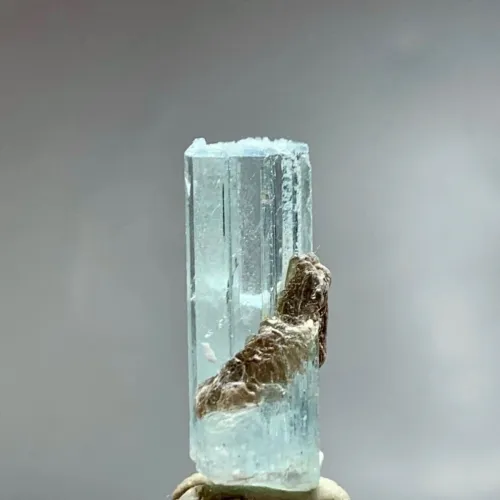
So, does aquamarine glow under UV light? The accurate answer is nuanced. Most natural aquamarines will exhibit a weak to moderate blue fluorescence under long-wave (365nm) UV light. But “weak” is the operative word. Imagine the soft blue of a gas flame, not a laser beam.
This glow isn’t magic; it’s chemistry. It’s primarily caused by trace amounts of iron ions (Fe²⁺/Fe³⁺) trapped in the beryl crystal lattice during its formation in pegmatite veins. When the right wavelength of UV light hits, these ions absorb energy and re-emit it as that visible, soft blue light. It’s a signature of the stone’s unique birth conditions.
| Scenario | Typical UV Reaction (365nm) | What It Means |
|---|---|---|
| Untreated, Natural Aquamarine | Faint to moderate blue | The expected, healthy response. May be uneven, following natural color zoning. |
| Heat-Treated Aquamarine (common for color enhancement) | Inert to very faint | Heat can alter the iron’s configuration, dampening the glow. This does not mean it’s fake. |
| Glass or Synthetic Spinel Imitation | Often inert, or an odd color (e.g., strong orange) | A red flag, but must be combined with other tests (bubbles, inclusions, refractive index). |
| Blue Topaz Look-Alike | Typically inert | UV can be one clue in separation, but not definitive alone. |
Forget the $10 keychain light. To have any hope of seeing the subtle glow, you need a methodical approach. Here’s my personal protocol, developed after frustrating nights of seeing nothing:
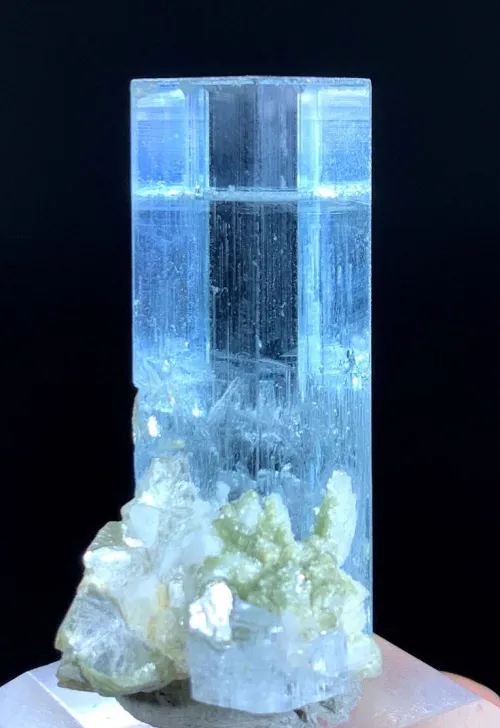
This is where we go beyond the original article. The real value of observing UV response isn’t in a simple pass/fail test. It’s in the patterns and variations.
A stone from the iron-rich deposits of Brazil may glow more noticeably than one from Pakistan. Uneven, patchy fluorescence often mirrors natural color zoning, proving its unaltered, geological origin. In a world of perfect synthetics and advanced treatments, these imperfect, faint patterns become a badge of authenticity—a direct visual link to the stone’s chaotic, natural formation. It’s a unique identifier, not just a property.
So, put away the disappointment. When you ask, “how can I use aquamarine fluorescence for identification?”, you’re asking the right question, but need the right framework.
Don’t use UV light to seek a dazzling show. Use it as a detective uses a black light at a crime scene—to reveal hidden details invisible under normal conditions. Look for the pattern of the glow. Check its correspondence to color. Note its intensity relative to the stone’s origin and treatment history (always ask for this!).
In the end, the faint blue whisper of your aquamarine under UV light isn’t a failing. It’s a quiet, confident statement. It’s the gem’s way of saying, “My story is complex, ancient, and written in the language of earth and element. If you take the time to look closely, and in the right light, I’ll share it with you.”


$
