Aquamarine's value depends on several measurable factors including color saturation, carat weight, and clarity grade. If you remember just one thing: premium prices correlate directly with intense blue-green hues and documented natural origins—always prioritize certified analysis over price claims.
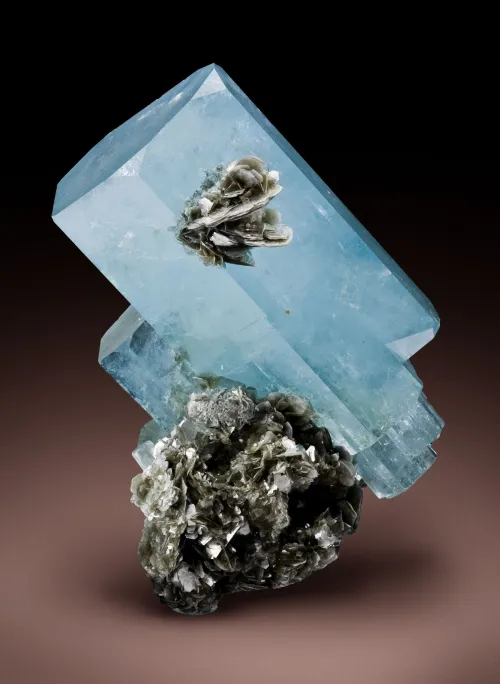
Many encounter confusing messaging about aquamarine valuation—hearing everything from bargain pricing to premium statements. Online retailers might highlight size but omit color descriptions, estate sales often reference age rather than gem quality, while collector forums debate origin impact in isolation. This guide cuts through fragmented claims by explaining interdependent value determinants step-by-step. We'll dismantle common misconceptions, teach you how to analyze key quality indicators, and build a framework for confident personal evaluation.
People frequently search for how much is aquamarine worth, expecting singular simplicity. This question persists because mass-market jewelry often uses standardized pricing grids, ignoring key variables. In reality, aquamarine lacks universal pricing due to its quality dependence—one-carat stones might show fortyfold value differences based on characteristics.
It is also crucial to distinguish between raw mineral trade and fine gem valuation. While mineral specimen collectors might calculate how much is aquamarine worth per gram, the fine jewelry market strictly operates on per-carat pricing due to the loss of material (often up to 70%) during the precision cutting process. Commercial-grade examples (pale blue/greenish, visible inclusions) can start at $50 per carat, while premium collector gems (rich blue tones, high clarity) command up to $2,000 per carat.
A simple way to grasp this: light transmission and color saturation directly correlate to value, since they demonstrate crystalline integrity. Stones above five carats may carry additional premiums when exhibiting strong spectral purity. When comparing pieces, establish three baseline assessments: First, observe color uniformity through daylight exposure (avoid artificial light bias). Next, request millimeter dimensions to independently verify carat claims. ly, compare clarity profiles similarly to diamond evaluation—use a jeweler’s loupe to inspect inclusions at 10X magnification before considering price justification.
A common assumption suggests that larger stones automatically warrant higher valuations, overlooking color distribution significance. This misinterpretation arises because many casual sellers use weight as primary marketing focus, downplaying other metrics.
To truly understand valuation, one must analyze the specific weight of each quality factor. The table below illustrates why two aquamarines of the exact same carat weight can have a price gap of over $15,000.
| Factor & Weight | Commercial Grade (Avg. $50-$300/ct) | Investment Grade (Avg. $1,000-$2,000+/ct) |
|---|---|---|
| 1. Color (40%) Primary Value Driver | Pale blue to near-colorless; often needs white background to show hue. | Santa Maria / Double Blue; intense saturation visible even in low light. |
| 2. Clarity (30%) Visual Purity | Visible inclusions or "rain" effects; strictly commercial appeal. | Eye-Clean to Loupe-Clean; zero visible interference with light return. |
| 3. Cut (20%) Light Performance | Windowed (see-through center); cut for weight retention rather than beauty. | Precision Faceting; no windowing, edge-to-edge brilliance. |
| 4. Origin (10%) Provenance | Unknown or General Stock (e.g., standard Brazilian/Chinese material). | Documented Heritage; e.g., verified Santa Maria de Itabira or Madagascar. |
| Est. 10ct Value | $500 - $3,000 Total | $15,000 - $25,000+ Total |
As shown above, color saturation increases pricing exponentially. Secondary clarity differences separate commercial from investment-grade units. Third, proportion precision affects brilliance retention: poorly cut stones leak light while precision faceting maximizes refraction. Fourth, collector demand for certain geographic origins can command location premiums when documented but shouldn't override fundamental characteristics.
Verify professional grading reports always reference these standardized evaluation metrics rather than relying on vague marketing terms.
Potential buyers often view gems holistically—"it looks beautiful"—instead of analyzing technical parameters separately. Emotional decision-making overrides objective analysis despite valuation requiring disassembled quality examination.
Apply this sequence methodology: Begin with calibrated instruments, checking refractive stability between 1.567-1.590 using optical testing tools. Then assess structural soundness—check cleavage directions to prevent fabrication compromise later. Subsequently, measure depth-to-width ratios that maximize brilliance across lighting environments. Crucially, document pleochroism visibility to validate crystalline pattern integrity, which tends to indicate natural formation consistency.
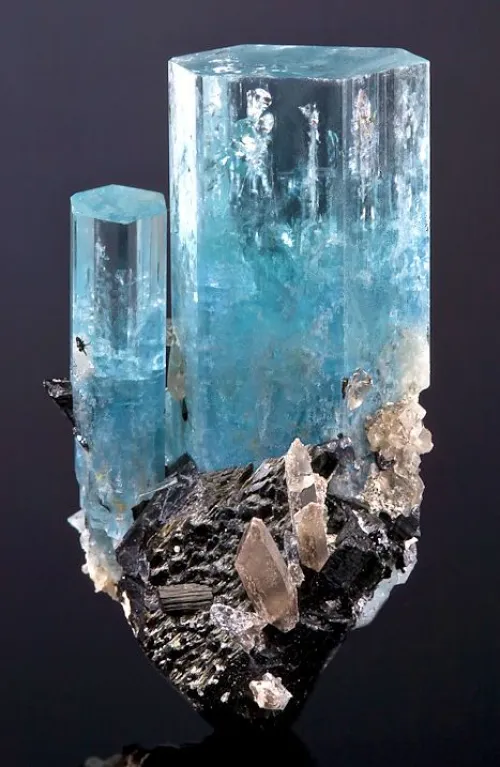
Implement professional grading protocol next time: Carry a compact reference book containing standardized clarity/color comparison charts. Examine specimens at three intervals: arm's length, 12 inches, then six inches, noting how color shifts. This reveals inconsistent zoning patterns hinting at treatments. ly, check stone thickness against pavilion angles—a too-shallow design indicates weight retention compromise prioritizing size over performance.
"Natural" claims abound for aquamarine without supporting evidence. This occurs because sellers frequently inherit stones lacking documentation but state origins positively, exploiting buyers' trust.
Valid authentication requires documented chain evidence. Certified gemological reports provide baseline objectivity by identifying treatments like heat enhancement through UV fluorescence analysis. Thermal conductivity differences also help distinguish synthesised crystals. Crucially, examine inclusions through bright-field microscopy: distinct liquid patterns may confirm geological origins while perfect tubular channels strongly suggest lab creations.
During evaluations, examine three authentication layers: First, require independent laboratory verification beyond vendor paperwork—look for GIA, AGL, or Gübelin documentation. Next, inspect surface features under magnification: natural stones display growth inconsistencies while synthetic ones show suspiciously regular striations. Last, request documentation history showing previous owners/certificates to establish provenance lineage when possible.
Speculation circulates about aquamarine as "inflation-resistant assets" comparable to blue-chip gems. Marketing emphasizes historical auction records but excludes more modest appreciation timelines.
Realistically, long-term value retention potential correlates with stone quality rather than blanket desirability. Many buyers try to assess how much is an aquamarine ring worth on the resale market, only to find that complex valuations apply. While the center stone may appreciate, commercial settings (gold/platinum) often depreciate to scrap value. Therefore, commercial inventory sees gradual price inflation tied to mining costs, while exceptional collector-grade specimens exhibit demand-driven premiums.
When considering acquisition potential, establish two separate evaluation criteria: commercial pieces prioritize immediate wearability with future resale as secondary concern, requiring verification of structural soundness for jewelry contexts. Collector acquisition focuses on four parameters: color purity, certified origins, precision craftsmanship, and provenance—any missing element lowers appreciation likelihood. Document storage location conditions since aquamarine may exhibit color stability questions under repeated intense light exposure.
Reference terms used in professional aquamarine valuation.


$
