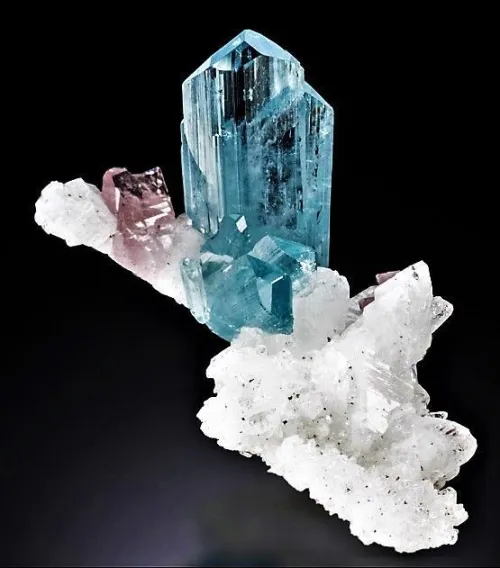
If you've ever admired a blue gemstone in jewelry stores, you might have encountered conflicting information about whether blue topaz and aquamarine are identical. This common confusion stems from their overlapping color ranges, marketing descriptions using vague terms like "sea blue," and some sellers capitalizing on visual similarities to blur distinctions. In this guide, we'll systematically break down seven key aspects—from mineral structure to market realities—so you can confidently identify these gems using specific physical properties and understandable indicators. You'll learn not just textbook definitions, but practical observation techniques you can apply during your next jewelry purchase.
Many assume blue topaz and aquamarine share identical blue hues because both get labeled "sky blue" or "ocean blue" in jewelry displays. This oversimplification occurs because marketing often prioritizes color descriptions over geological origins—especially when gems appear similar to untrained eyes. The confusion gets compounded when both stones sit against blue velvet in adjacent trays, creating artificial visual alignment.
In reality, their underlying structures make them fundamentally different. Aquamarine belongs to the beryl mineral family with hexagonal symmetry, while blue topaz has an orthorhombic crystal arrangement. This structural variance means light travels through each material uniquely—one reason professionals study refractive patterns to distinguish them. These aren't cosmetic variations but foundational differences comparable to distinct tree species bearing similar-looking fruits.
Next time you compare such gems, notice directional properties: rotate them under light. Aquamarine often displays more consistent color across angles due to its crystal symmetry, while blue topaz may show two-color effects from optical interference in certain orientations. Document these observations using your phone camera for side-by-side comparison—you'll gather meaningful clues beyond basic color perception.
When jewelry enthusiasts hear both stones contain silicate, they sometimes conclude their compositions are identical—leading to confusion about value differences during purchases. This question surfaces constantly in gemology forums because superficial similarities mask elemental diversity, which remains invisible without technical tools.
The clearer way to see it involves breaking down their chemical recipes. Aquamarine is beryllium aluminum silicate (Be₃Al₂Si₆O₁₈) with its blue-green tint coming from iron traces, while blue topaz features aluminum silicate fluoride hydroxide (Al₂SiO₄(F,OH)₂) and owes its color primarily to irradiation treatments. Natural blue topaz remains exceptionally rare—over 98% of market pieces receive artificial enhancement, creating a significant divergence from aquamarine's typical natural coloration.
For practical identification, focus on weight and density as proxies for composition using simple comparisons. If handled together, blue topaz typically feels noticeably heavier than aquamarine of comparable size—an indication of specific gravity differences you can test informally during shopping. This physical sensation provides tangible evidence of underlying compositional variations.
Many rely solely on color saturation to identify stones, believing deeper blues must indicate one variety over the other. This assumption gets reinforced through online images where lighting conditions artificially amplify color intensity differences, distracting from other diagnostic clues. People frequently overlook how gem cut, lighting direction, and setting metals affect color perception.
Technically speaking, both stones cover overlapping blue spectrums, but their light interactions differ. Aquamarine often displays more even coloration with subtle hints of green in natural lighting, whereas blue topaz frequently shows stronger dichroism—presenting distinct shades when viewed from different angles. Beyond hues, experienced jewelers study gem interiors through magnification. You might notice aquamarine tends to contain liquid inclusions, while some treated topaz exhibits gas bubbles—subtle signs beyond naked-eye color evaluation.
Train your observation using a basic tenfold loupe. First, examine in reflected daylight (avoid direct sunlight). Note not just primary color, but secondary tones around facet edges. Aquamarine typically projects cooler, green-tinted undertones in this environment, while blue topaz often appears more consistently medium-to-dark blue. This practice helps develop observational skills beyond what marketing photographs can demonstrate.
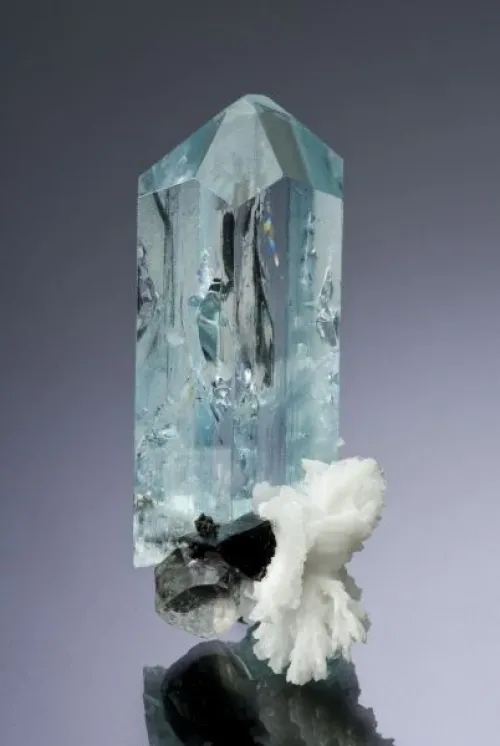
When encountering seemingly identical stones, people often feel identification requires specialized tools beyond everyday reach—overlooking accessible physics-based techniques available through jewelers. This perception creates dependency on seller descriptions versus personal verification—especially challenging during online purchases without physical handling.
Practical alternatives exist using measurable properties like density and light refraction. For instance, specific gravity differs significantly: aquamarine averages 2.72 while blue topaz comes in around 3.56—a density contrast often noticeable during informal weight comparisons with reference pieces. With basic tools, jewelers can demonstrate refractive index differences using refractometer testing (1.619-1.627 for aquamarine versus 1.609-1.643 for blue topaz), available at local jewelry shops for minimal fees.
Request density assessments if considering major purchases—any reputable jeweler can demonstrate using liquid separation methods. Observe how gem specialists position gems in optical devices—these non-destructive procedures take minutes and strengthen your confidence in identification. Consider them educational investments rather than fees.
The belief that cost directly indicates better gemstone quality causes confusion between these stones—especially when similarly sized pieces have significant price gaps. This perception often leads shoppers to undervalue aquamarine’s natural occurrence versus enhanced blue topaz’s abundance and perceived "bargain" pricing.
Market valuation actually weighs factors beyond size and appearance. Flawless aquamarine over three carats remains relatively scarce compared to readily available large blue topaz—affecting long-term value trajectories. Treatment disclosures also impact pricing frameworks: untreated stones generally command higher valuations than enhanced counterparts. While both materials have beautiful applications, aquamarine typically maintains higher value per carat in comparable quality ranges because market dynamics place greater value on naturally colored stones.
When evaluating pieces, inquire specifically about origin verification documentation. Sellers should clarify whether aquamarine is entirely natural or treated—and confirm blue topaz enhancement processes. This information helps contextualize pricing beyond surface appearance comparisons. Retailers using ambiguous terms like "reclaimed color" or "natural enhancement" warrant extra verification steps.
Many presume Mohs hardness ratings (7.5-8 for both) guarantee equal durability—overlooking cleavage planes and fracture tendencies. This misunderstanding sometimes leads to inappropriate handling when wearers believe these gems function like diamonds. Complaints about mysterious chips often stem from undetected structural vulnerabilities rather than impact incidents.
Aquamarine has indistinct cleavage planes which make it less fracture-prone than blue topaz with its pronounced basal cleavage. Blue topaz requires protective settings for ring use—especially preventing knocks against tabletops or counter edges. Both gems need protection from thermal shock during cleaning; their chemical compositions react differently when subjected to ultrasonic or steam cleaners with temperature extremes.
For care protocols, use lukewarm water with mild soap for cleaning both stones. Avoid mechanical systems and instead gently scrub with a soft toothbrush. For jewelry storage, separate them in fabric-lined compartments to prevent contact with harder gem materials. These routines extend jewelry life more effectively than theoretical hardness ratings suggest.
Terms like "Brazilian aquamarine" applied to blue topaz—or "artisan-treated" replacing irradiation disclosures—create intentional ambiguity between natural and enhanced stones. Sellers sometimes rely on consumers misapplying identification skills to unfamiliar varieties like "London blue topaz" versus darker aquamarine.
Consumer awareness focuses on understanding that blue topaz treatments and names don't equate to geological origins. Gemological institutions emphasize transparency—natural aquamarine gets colored solely by geological processes, while blue topaz obtains its dominant color from human intervention. Disclosure requirements vary internationally, making proactive verification essential rather than trusting descriptions like "semi-precious blue gem" or "ocean crystal."
Develop verification habits: When considering purchases, cross-check seller descriptions against three parameters—origin (mining location), creation (laboratory enhanced versus earth formed), and composition certification (if available). Discrepancies among these categories suggest misrepresentation. Third-party lab verification remains worthwhile for investment-quality pieces over $500.
These distinctions matter because they transform your gem experience: Now, when you examine jewelry, you'll notice how weight differences indicate composition variations, how lighting angles reveal natural dichroism differences, and why origin questioning becomes essential. Keep these foundations in mind: atomic structures determine physical properties, treatment histories impact valuation, and observable features like inclusions offer identification clues. These principles apply beyond these two stones—serving your lifelong engagement with colored gemstones.
Next time you encounter blue gems, perform these two simple checks before color evaluation: Place similar-sized stones in your palms to compare heft differences (density), then rotate them under consistent light to study color variance through rotation (dichroism). Your growing observational skills—not marketing claims—will guide confident identification over time.
Q: Can both stones lose color over time?
Aquamarine generally maintains stable color under normal light exposure while some treated blue topaz may show slight fading over decades if exposed to intense sunlight daily.
Q: Which stone performs better for engagement rings?
Aquamarine shows greater resistance to cleavage fractures during daily wear due to structural factors, though both benefit from protective settings.
Q: Do lab tests always identify treatments?
Testing reliability depends on equipment quality—advanced spectroscopy can detect irradiation traces in topaz, but basic magnifier inspections miss treatments.


$
