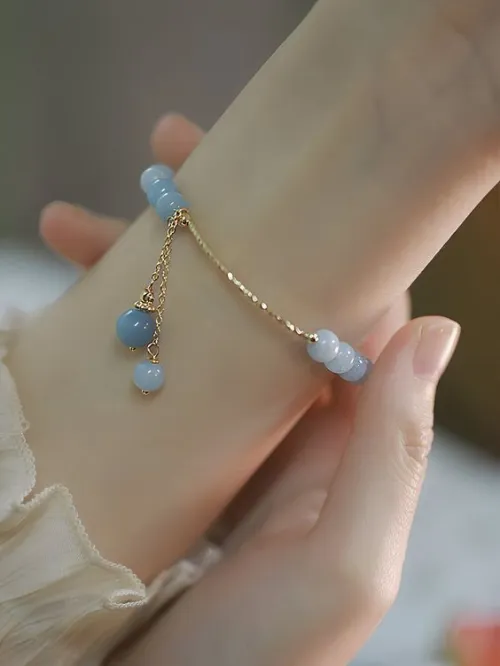
During holiday shopping, gift-givers often face uncertainty about gemstone symbolism—confusing aquamarine's meaning with other blue stones, wondering if its pale hue appears "too cold" for festive occasions, or struggling to translate emotional intentions into tangible designs. These questions become particularly complex with symbolic gifts where personal meaning matters more than cost. This article systematically clarifies how aquamarine's physical properties interact with cultural associations, provides tools to evaluate jewelry designs for seasonal resonance, and prepares you to make confident choices by separating poetic descriptions from practical considerations. We'll walk through seven structured dimensions in this guide starting from the most fundamental attributes.
The color blue connects deeply to emotional symbolism, leading to common descriptions like "stone of courage" or "soothing stone" in jewelry contexts. These associations typically stem from visual impressions rather than technical attributes—the pale blue shades resemble calm waters, creating an intuitive link to tranquility. Such interpretations can seem arbitrary without context for why certain physical traits trigger specific feelings across cultures.
Objectively, aquamarine belongs to the beryl mineral family with crystalline structures that refract light uniquely. Its cool-toned blue shades tend to maintain consistent appearance under various lighting, which may contribute to its perception as emotionally steady. While symbolic meanings are culturally constructed, the stone's physical stability—evident in its 7.5-8 hardness rating—provides objective grounding for associations with dependability when thoughtfully presented.
When encountering symbolic claims, first locate objective references: check descriptions of the gem's light refraction patterns or hardness characteristics. Then verify whether symbolic terms genuinely build upon these material qualities. Notice specific terms like "calming"—which aligns with visual consistency—versus unrelated descriptors.
Gifters might hesitate believing pale blue gems can feel festive alongside traditional Christmas colors. This concern often arises because holiday imagery emphasizes warmth while aquamarine presents as cool-toned. Additionally, festive jewelry typically features conspicuous sparkle that may seem less obvious in lighter stones under certain lighting conditions.
Aquamarine's refractive qualities create luminosity comparable to snow or ice reflections. Cut patterns can maximize brilliance to enhance visibility in indoor lighting, which may support the stone’s potential for wintertime connection. The consistency of its coloring across light conditions can strengthen its association with enduring emotional bonds that transcend seasonal moments but resonate deeply during reflection-filled holidays.
Evaluate whether pale blue complements or contrasts meaningfully in festive contexts: Hold prospective pieces near silver ornaments or cool-white lighting. Notice how color intensity interacts with familiar holiday textures. Ask yourself whether calmness contrasts provide meaningful holiday counterpoints instead of matching red/green traditions directly.
Focused mainly on color depth, clarity and carat weight creates confusion about which characteristics actually convey symbolic weight. Conventional wisdom sometimes equates darker blues with "better quality" despite their weaker connection to aquamarine's symbolic essence. Similarly, flawless clarity may be pursued aesthetically though it carries little symbolic relevance beyond light performance.
Light refraction determines visibility of symbolic presence: Well-optimized cutting patterns emphasize transparency to enhance brilliance without color treatment. Natural clarity characteristics that don't impede light performance can be acceptable while retaining authentic symbolism. Blue tone distribution—whether uniform or gradient—influences how consistently the stone communicates its symbolic message across viewing angles through controlled light reflection.
Prioritize stone traits supporting symbolic functions: Examine how cuttings maximize brilliance rather than just carat weight. Notice subtle color variations under multiple lighting sources to gauge consistency. Request retailers to demonstrate refractive patterns using directional lighting to see how designs enhance intrinsic qualities before purchasing.
Settings are sometimes chosen purely for decorative purposes without considering their narrative potential. For example, elaborate mounts may distract from the stone's symbolism. There's also frequent assumption that silver-toned metals are default choices when white gold specifically enhances watery hues through reflection dynamics more effectively.
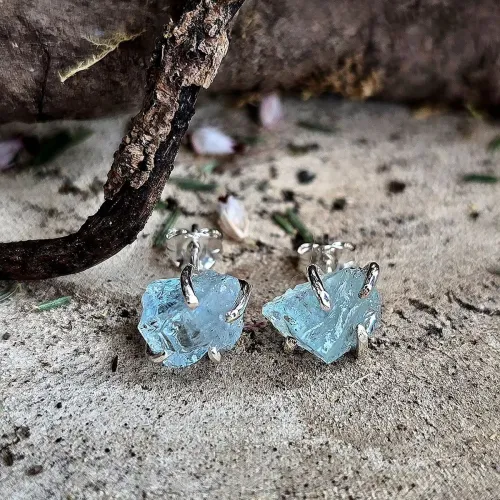
The mounting choice directs attention toward specific stone characteristics: Sterling silver or white gold settings can brighten cool-toned blues visually through complementary undertones. Bezel settings offer robust protection while maintaining symbolic prominence through unimpeded exposure. Prong arrangements balance design minimalism with secure enclosure, potentially offering symbolic resonance about connection and protection.
Verify design synergy: Examine profile views ensuring settings frame rather than conceal stones—a principle aligning with symbolic communication. Test visual harmony by placing pieces against fabrics matching common holiday attire. Notice how bezel edges interact with stone proportions to strengthen symbolic presence through proportional relationships.
Perceptions exist that symbolic jewelry requires delicate handling incompatible with active lifestyles, potentially diminishing gift confidence. Questions about scratch vulnerability or color fading commonly surface since many associate pale stones with fragility despite material science indicating otherwise. Care requirements become important to consider alongside symbolic meanings.
Aquamarine's molecular stability provides notable resilience: The gem may resist scratches better than many holiday gem options due to its inherent 7.5-8 Mohs hardness. Its chemical inertness allows consistent exposure to festive elements—cosmetics, humidity—without tarnishing. Protective coatings on settings can strengthen resistance against abrasion through molecular bonding techniques while specialized cleaning is typically unnecessary.
Recognize protective advantages: Ask retailers about metal plating thickness and setting architecture when assessing longevity. Compare care instructions against recipient lifestyle factors. Remember that regular cleaning preserves symbolic visibility by maintaining clear reflections.
Gifters often wonder if stones require personal resonance with recipients or whether universal qualities provide sufficient meaning—especially when choosing surprises. Budget constraints may raise "size versus significance" dilemmas regarding visible color impact versus carat weight. There's also healthy questioning about potential gap between poetic descriptions and wearable realities.
Aquamarine properties create meaningful accessibility: Blue tones tend to complement diverse skin undertones consistently, potentially broadening receptive audiences. Modular settings allow future design modifications as symbolic relationships evolve without gem replacement. Hypoallergenic components minimize wearing barriers through metallurgical considerations even when gifting to untested recipients during holidays.
Focus decisions on meaningful parameters: Note color performance relative to budget rather than carat benchmarks alone. Ask jewelry specialists to demonstrate matching processes using neutral-toned papers to judge versatility. Document measurements showing how designs translate symbolic meanings into physical characteristics when gifting.
Consider three key principles for confident gift selection: First, aquamarine symbolism builds primarily upon observable properties—refraction quality demonstrates tranquility through light interaction. Second, jewelry designs should support rather than overwhelm the gem's natural characteristics. Third, seasonal resonance emerges through intentional alignment between material qualities and holiday values.
Next time you examine aquamarine pieces for gifting, start by looking at light patterns across the stone's surface under varied lighting—observe how brilliance manifests. Then verify setting functionality beyond aesthetics, noticing prong security and backplate coverage. Finally, connect features to specific recipient values. Meaning develops progressively through thoughtful choices, not singular perfect selections.


$
