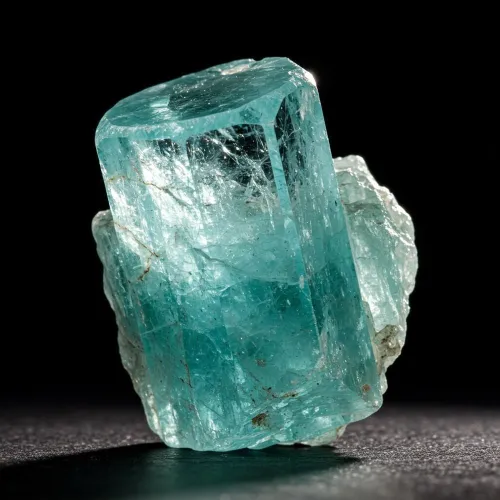
Many wonder why March has two birthstones or how aquamarine differs from similar blue gems. Confusion often arises around its durability, color grading standards, and mystical associations. This guide examines evidence-based facts about geological formation to quality indicators, separating folklore from verifiable traits so readers can confidently identify genuine March birthstones.
Some assume any pale blue gem qualifies as March’s birthstone, influenced by marketing terms like "aqua-colored crystals." This oversimplification confuses mineral categories, especially when looking at abundant gems like blue topaz or synthetic spinel.
In reality, birthstones are defined by international gemological associations. Aquamarine, a beryl variant with iron impurities, specifically meets March’s criteria. Its hexagonal crystal structure fundamentally differs from cubic zirconia options or glass-based imitations. When comparing stones, notice the refraction index between 1.577-1.583 creating distinctive aquatic sparkle patterns.
Next time you verify birthstones, ask the seller these diagnostic questions: "Can you share the mineral classification?" and "Does this report show a hexagonal structure under magnification?" Authentic aquamarine consistently registers 7.5-8.0 hardness on the Mohs scale, a practical benchmark.
People often picture aquamarine forming in ocean depths since its name means "seawater." This poetic association overlooks actual geology since these gems crystallize in pegmatite veins beneath continental crusts, unrelated to marine environments.
Technically, aquamarine develops when beryl interacts with iron during slow cooling phases. Iron concentration determines whether stones appear sky-blue or deep teal – generally higher iron means greener tones. Interestingly, photochromic effects may temporarily intensify blue hues under UV light, though this doesn’t alter inherent chemistry. Primary sources include Brazilian mines and African deposits, with crystal sizes occasionally exceeding golf balls.
When comparing aquamarine specimens, consider this geological reality. Examine whether vendor descriptions mention pegmatite origins versus undersea locations. Verify locality data when possible since Brazilian material tends toward greener blues while African stones often display deeper cornflower shades.
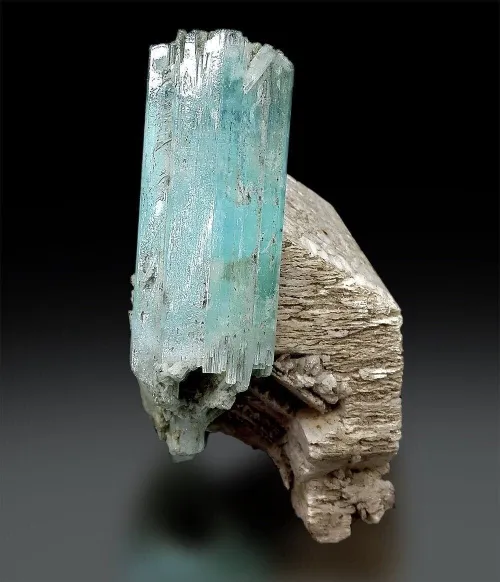
Jewelry branding sometimes emphasizes "vivid blues" as superior quality, leading buyers to overlook legitimate beauty in subtle hues. In truth, light-to-medium saturation stones maintain more consistent market value across economic fluctuations than intense blues, which often require treatments.
The clearer view: Untreated aquamarine presents natural hues influenced by iron content. Standard grading evaluates clarity from VVS (eye-clean) to included, with top-grade stones exhibiting transparent properties. Skilled faceting maximizes brilliance, typically featuring 48-57 angled planes on classic emerald or cushion cuts. Note that pleochroism may cause faint color shifts when rotating stones under light, a unique identifier versus glass copies.
When shopping, adopt these observation tactics: First, rotate gems under a daylight bulb noting any subtle color variation. Second, request gemological reports confirming natural origin. Third, use magnification to inspect facet junctions where unnatural smoothing might indicate synthetics.
Popular designs showcase aquamarine alongside diamonds in yellow gold, creating compatibility concerns through metal dissimilarity. While visually striking, these combinations risk uneven wear as softer gold prongs may loosen over time.
The optimal approach involves prong or bezel settings in white metals like platinum, which better complement cool-toned stones. Standard mountings accommodate ±2 ring resizes without compromising gem security. For sensitive wearers, hypoallergenic backings prevent skin reactions without blocking light entry. Durability testing confirms minimal abrasion occurs after years of regular wearing when protective coatings shield pavilion facets from chipping.
A practical action: If your aquamarine piece feels loose, immediately consult a jeweler. Develop the habit of checking prong tightness quarterly using your thumb nail against the girdle. Simple prevention helps avoid costly recutting.
Ancient texts sometimes attribute metaphysical powers to aquamarine, like warding off storms at sea. Though compelling, these accounts blend poetic imagination with mineral properties; modern interpretations emphasize tangible benefits instead.
Scholars trace aquamarine's significance to ancient Greek sailors believing it calmed Poseidon's temper, later evolving into Western traditions connecting it to tranquility. Scientifically, the psychology of blue hues links to serenity responses – independent of gem composition. When exploring symbolism, acknowledge cultural variations: European legends tied it to marital harmony while Chinese traditions historically valued greener shades.
Contextualize symbolic claims by asking: "Which era or culture originated this meaning?" Cross-reference stories against museum collections rather than solely relying on verbal traditions when evaluating historical narratives.
Many assume ultrasonic cleaners safely remove residue from aquamarines since they’re recommended for diamonds or rubies. Unfortunately, this practice risks internal fractures despite the stone’s thermal stability to 800°F. The high-frequency vibrations can aggravate natural inclusions.
Correct care requires neutral solutions only – lukewarm water with mild pH-balanced soap avoids damaging chemical reactions. A soft brush gently removes buildup without scratching pavilion facets. For maintenance planning, remember aquamarine’s long-term color preservation relates directly to avoiding acids in cosmetics or chlorine in pools. Pat dry your stone immediately after cleaning since water spots may form.
Create a protective routine: Once monthly, soak jewelry briefly in soapy water. After rinsing, place stones on a towel overnight ensuring complete drainage from settings before wearing. This avoids residue accumulation behind the gem that might lead to early wear.
Historical anecdotes sometimes claim aquamarines changed color to warn owners of poison – a dramatic tale lacking verifiable proof. Contemporary analysis attributes this idea to misinterpreted light effects.
The factual progression: Early gem cutters discovered that heating aquamarine could intensify blue tones. Today, spectroscopy distinguishes natural stones from heated ones by examining iron oxide patterns. Modern values emphasize the gem’s light-play rather than superstition. While synthetic alternatives demonstrate identical optical properties, they lack natural imperfections collectors appreciate as identifiers.
When encountering historical claims, practice source triangulation: Check museum archives against peer-reviewed mineral journals. Compare auction descriptions with laboratory analysis certificates when available.
Remember aquamarine’s core identifiers: hexagonal structure, 7.5-8 hardness, and refractive patterns distinct from simulants. When encountering claims about protective energies or color-changing abilities, recall they stem from poetic history rather than current gem science.
Start applying this knowledge when viewing birthstone jewelry: First, examine gem reports for iron content indicators. Second, notice lighting impacts through deliberate rotation. Third, consider setting security over fleeting design trends. Your assessment skills will grow steadily through these objective checks.
Q: Does sunlight exposure fade aquamarine color?
A: Extended UV light exposure may intensify blue hues through photochromic effects, although this tends to be temporary rather than permanent fading or enhancement.
Q: How does synthetic aquamarine compare to natural?
A: Laboratory-created versions share similar optical brilliance but differ in internal inclusion patterns. Professional gemological instruments easily identify these variations.
Q: Is darker aquamarine inherently more valuable?
A: Not necessarily. Deeper saturation might suggest higher iron content, but market prices more strongly correlate with clarity grades and cutting precision rather than hue intensity alone.


$
