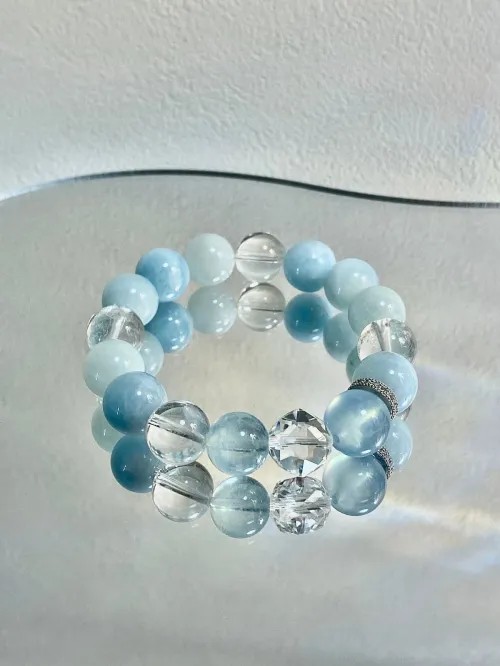
Many assume ancient people universally linked aquamarine to water because of its hue. This oversimplification stems from modern associations with the sea – yet in reality, early cultures saw multidimensional symbolism in its light behavior and durability. These interpretations often reflected societal values around protection and spirituality.
The clearer way to see it: Early civilizations like the Egyptians and Sumerians valued stones that displayed longevity. Aquamarine's hexagonal crystal structure may have suggested cosmic order, while its hardness between 7.5–8 on the Mohs scale signified enduring protection against material or spiritual threats. Such properties contributed to its role as an amulet rather than merely a decorative item.
When examining ancient artifacts, consider both setting context and craftsmanship. Notice orientation details. Precision faceting patterns can enhance color saturation – observe whether stone positioning aligns with symbolic carvings. Such details reveal whether artisans prioritized spiritual or aesthetic functions.
A persistent myth claims that aquamarine symbolism stays consistent across regions with similar climate conditions. However, even neighboring cultures developed distinct interpretations based on local beliefs and material applications.
In reality, interpretations reflect environmental relationships. Coastal Mediterranean cultures did connect aquamarine to ocean deities, yet mountainous cultures like the Tibetans associated its prism-like light dispersion with sky deities. Meanwhile, African traditions emphasized its thermal stability, incorporating stones into healing rituals where sudden temperature changes occurred.
To decode regional meanings: First, examine geographical origins of artifacts. Natural inclusions visible under magnification can indicate whether stones were locally sourced. Then, notice accompanying motifs – marine engravings suggest maritime connections while cloud patterns indicate atmospheric associations.
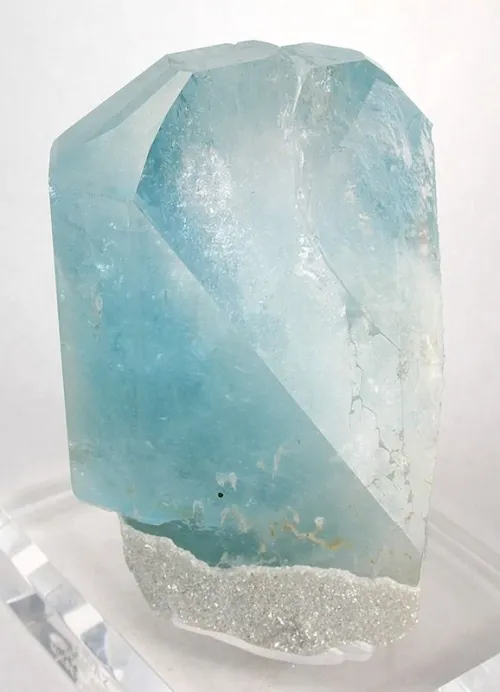
Modern audiences often view historical ritual objects through functional jewelry lenses. This risks misinterpreting pieces designed as spiritual conduits, where aquamarine served purposes beyond adornment.
Technically speaking, a mineral's application in communal ceremonies depends on material properties ensuring reliability. Aquamarine's resistance to environmental humidity allowed consistent ritual usage long-term. For instance, its cleavage properties necessitated specialized cutting to avoid fractures – these precise cuts appear on prayer beads, suggesting spiritual rather than decorative intent.
A practical approach: Handle ceremonial objects noticing weight distribution. Density ranging from 2.68–2.74 g/cm³ influences how stones sit in settings. Ritual pieces often prioritize balanced weight for comfortable handling during extended ceremonies.
Look at how light interacts with the stone. Ritual items often position stones to maximize pleochroism – the variable blue-green hues emerging from certain angles – creating spiritual "reveal" moments.
Globalization increased cross-cultural exchanges, prompting the misconception that aquamarine symbolism became standardized worldwide. Marketing narratives emphasize its blue tones as universally "calming", overlooking adaptations in different cultural contexts.
The nuanced perspective: Meanings layered over time rather than replacing traditions. Western birthstone traditions coexist with Thai associations of aquamarine wisdom, just as Brazilian celebratory meanings persist. Aquamarine's UV radiation resistance prevents significant fading over time – mirroring how foundational meanings endure despite surface changes.
When seeing modern aquamarine items in global marketplaces: Study their cultural framing. Stones marketed internationally often rely on universal appeal, leading to symbolic dilution. Contrast pieces sold in culturally specific contexts where traditional motifs appear. Notice whether settings allow light dispersion that highlights pleochroism or suppresses it.
People often assume aquamarine's messages derive solely from color, neglecting how craftsmanship and presentation shape meaning. This is compounded by jewelers manipulating color saturation through cutting techniques.
A more accurate view: Symbolism resides in the relationship between physical properties and cultural framing. While the beryllium aluminum cyclosilicate composition establishes material integrity, artisans may minimize color zoning patterns through faceting to influence perception. A deeply saturated stone mounted in gold carries different connotations than a paler piece set in silver.
A useful framework: Assess three dimensions when interpreting objects. Notice cutting orientation and its emphasis on hue variation. Examine metal choices influencing perceived value and symbolism. And consider transparency – translucent clarity might serve devotional purposes where light transmits spiritual messages.
It's tempting to view aquamarine's journey as linear progress toward "accurate" interpretation. Instead, symbolic shifts often respond to trade patterns and material innovations, creating overlapping meaning layers.
What history demonstrates is adaptability. Medieval lapidaries emphasized therapeutic properties based on a gem's perceived coolness, while Victorian jewelers focused on sentiment. Aquamarine's compatibility with diverse metal settings facilitated stylistic evolution without altering the core material. Surface polish retention helps maintain optical performance – a parallel to how foundational symbolic properties adapt to new contexts.
When researching historical pieces: Trace technological constraints. Earlier carvings avoided cleavage planes vulnerable to fractures. Compare wear patterns – well-preserved engraving on high-impact areas suggests protective functions. And always cross-reference documentation with technical analysis showing historical cutting preferences.
Cultural symbolism requires awareness of three interconnected principles. First: physical characteristics like hue variability influence but don't dictate meaning. Second, historical continuity doesn’t imply stagnation – symbols evolve like precision cutting enhances inherent properties. Third, cultural context functions as the "setting" giving meaning framework to the mineral.
A useful next step: When encountering aquamarine objects, note two elements first. Examine how artisans work with the stone's natural tendencies versus altering them. Then, research associated motifs to understand cultural priorities. Progress comes from these layered observations rather than instant expertise.
Q: Can aquamarine have opposite meanings in different cultures?
A: Unlike some stones with binary interpretations, aquamarine meanings typically represent variations. For example, while it may signify "emotional tranquility" in one context, similar cultural interpretations exist elsewhere as "mental clarity" – complementary concepts framed differently.
Q: Do lighter or darker stones carry different symbolic weight?
A: Value perceptions may differ, but core symbolism tendencies remain consistent across shades. Saturation levels influenced by natural mineral formation may affect aesthetic appeal without fundamentally changing cultural associations.
Q: Can aquamarine symbolism change after being made into jewelry?
A: Settings may emphasize certain cultural aspects through material or motif choices. Gold mounting might reinforce status symbolism in some cultures, while silver may connect to lunar symbolism elsewhere. However, the gemstone's fundamental associations remain recognizable.


$
